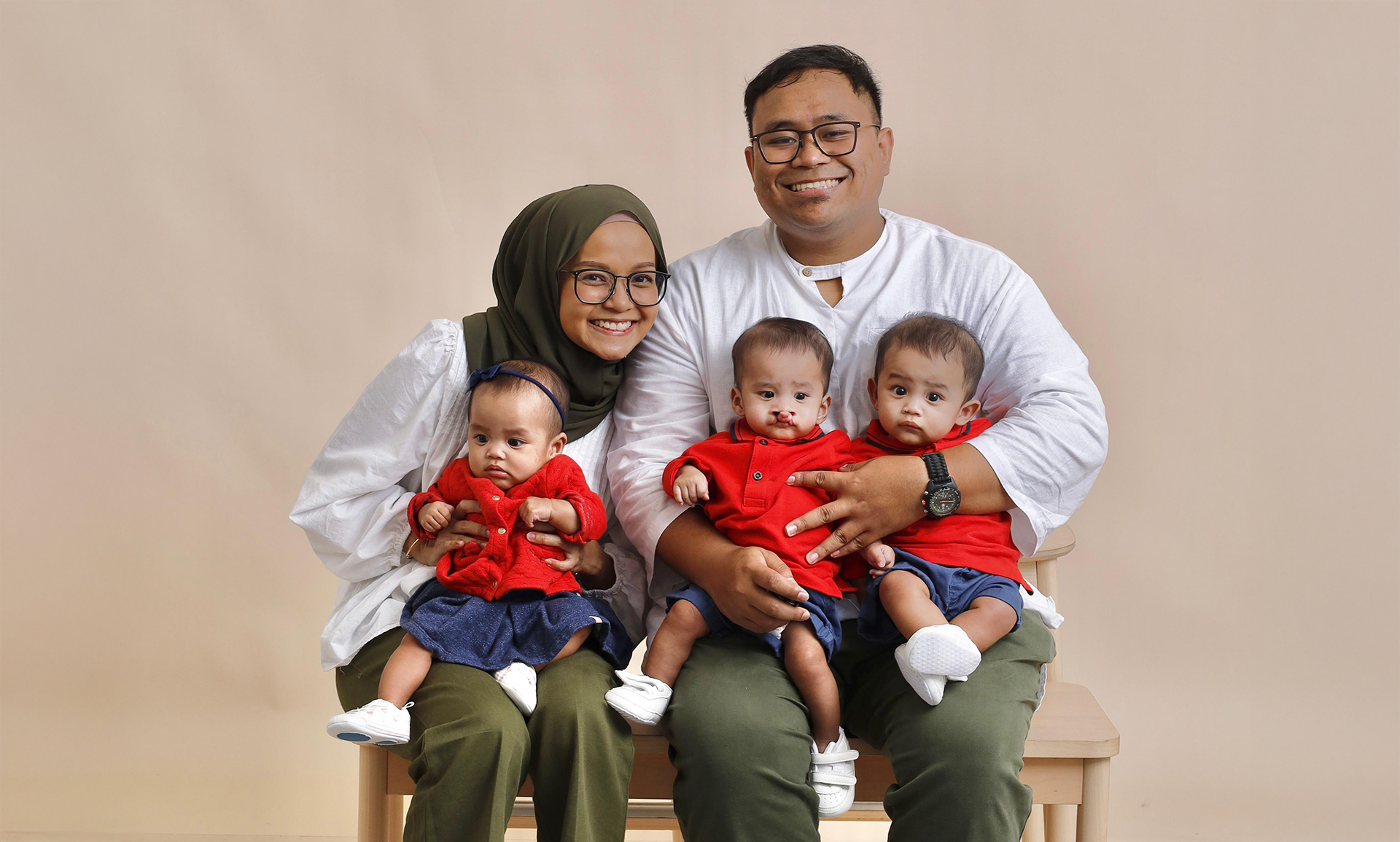
For many couples navigating infertility, the journey to parenthood can feel long and uncertain. For this Singapore mum, that journey led to IVF, an unexpected triplet pregnancy, a high-risk delivery, a cleft diagnosis, and even postpartum heart failure.
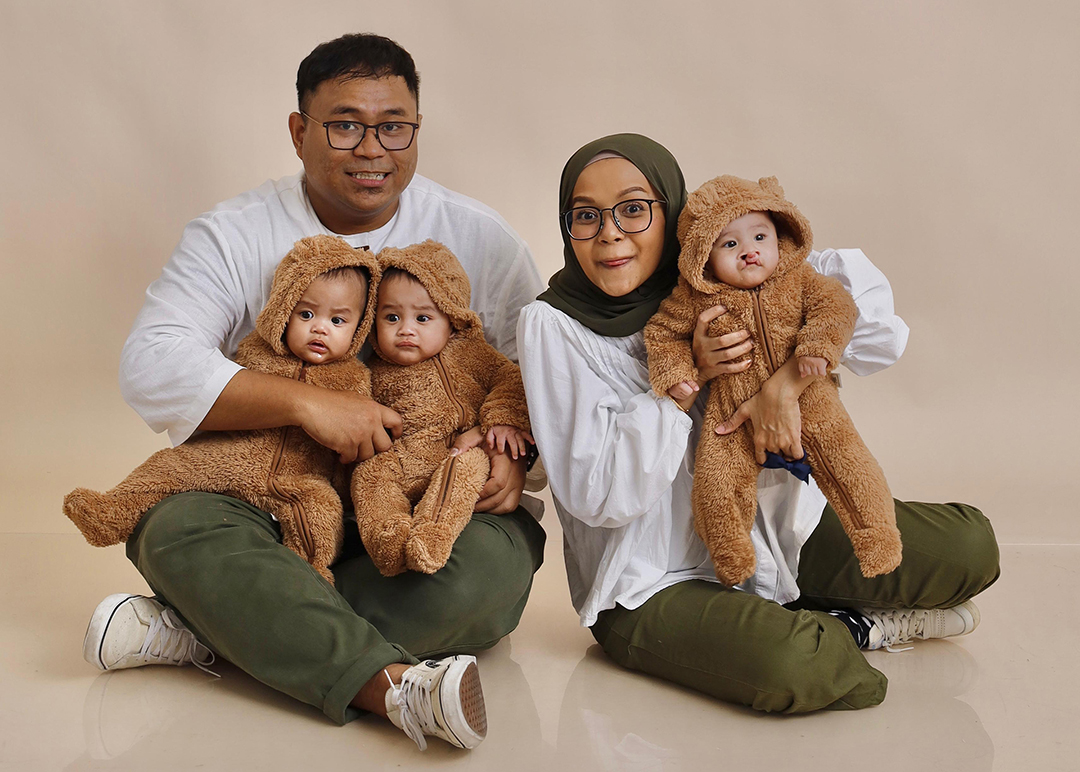
In this deeply honest interview, Amalina Sidek (more affectionately known as Nina) shares what it was like to conceive via In Vitro Fertilization (IVF) in Singapore, carry DCTA triplets, deliver via C-section, and support one child through surgeries, while experiencing serious postpartum complications herself.
Hi Nina! Please introduce yourself and tell us a little more about your family.
My husband, Nirza Jafry, and I have been married since 2017. We had been trying to conceive since then. We tried to conceive naturally and went for fertility checks at KK Women's and Children's Hospital (KKH) in 2019. Everything seemed fine except for a small polyp, which we were told should not affect our chances of conceiving.
I informed the medical team that I would try for another year, but then the COVID-19 pandemic hit. Before we knew it, it was already 2023. At the start of that year, I told myself I would do everything—get a new home, try other methods of conceiving, and explore all options. I have always wanted children, even though I never really knew how to communicate with or handle little children when I saw them.
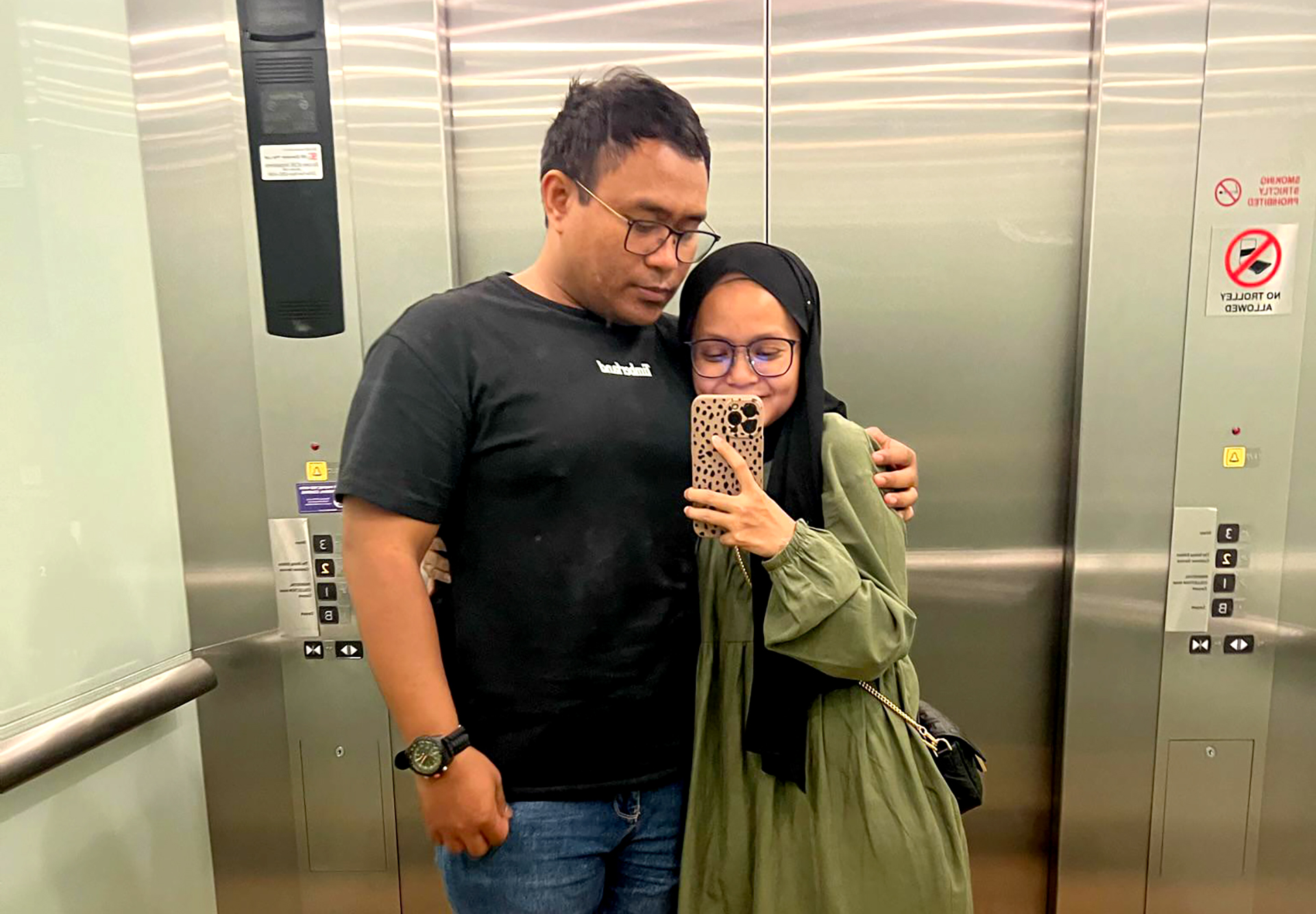
Turning 35 that year, medical fertility treatment in Singapore was the only method we had not tried. Nirza has always respected my decision because physically, I would be the one going through the treatment. I’ve always been someone who, if I want something, I want to achieve it on my own. That’s why IVF was not my first choice—it felt like assisted reproduction rather than something I achieved naturally. I only became more open to the possibility of it after watching TikTok videos of others who went through IVF.
As for my personal IVF journey in Singapore, we started treatment in February 2023. I had been working from home since the COVID-19 pandemic. Thankfully, my manager at work was extremely understanding and that further eased things for me.
For our first appointment, we were lucky to secure slots at both KKH and Thomson Fertility Centre on the same day. We went to both to decide where we felt more comfortable. We eventually chose Thomson because everything moved faster, and since I was turning 35, I felt I had no time to waste in case we needed multiple cycles.
Like most couples, we started with Intrauterine Insemination (IUI). However, a week later, our IVF specialist obstetrician and gynecologist, Dr. Janice Tung, informed us that my uterine polyp had grown to 1 cm and recommended removing it so it wouldn't interfere with treatment. Since I had already produced eggs, she suggested converting to IVF.
Timeline:
- End March 2023: Egg retrieval (converted to IVF).
29 follicles were retrieved; 9 fertilised, including 1 blastocyst. The rest were Day 3 embryos. - Mid April 2023: Hysteroscopic polypectomy.
- End May 2023: Embryo transfer.
What was your initial reaction when you found out you were expecting triplets?
During treatment, I didn’t fully utilise my hospitalisation leave unless I felt very weak. I assumed we might need several cycles before succeeding.
Before the embryo transfer, Dr Janice Tung asked how many embryos we wished to transfer, explaining that the maximum allowed was two. We chose to transfer two embryos, and she asked again if we were financially and mentally ready. As a DINK couple (dual income, no kids) for six years, we were financially ready. Mentally? I don’t think anyone truly knows what to expect, but that was our choice.
After the two-week wait, my human chorionic gonadotropin (hCG) level was 4,257. At our next appointment, Dr Janice shared that it was likely twins. We were thrilled and prayed both babies would stick.
We gave each family member $2 to share the news of our IVF success story, trying to subtly hint at a twin pregnancy, but nobody noticed because $2 is the smallest note denomination in Singapore!
At the following scan, which happened to be our 6th wedding anniversary, Dr Janice suddenly said, “Oh my God.” I panicked, thinking something was wrong. Then she said, “There are three.” One embryo had split. That was how we found out we were expecting triplets.
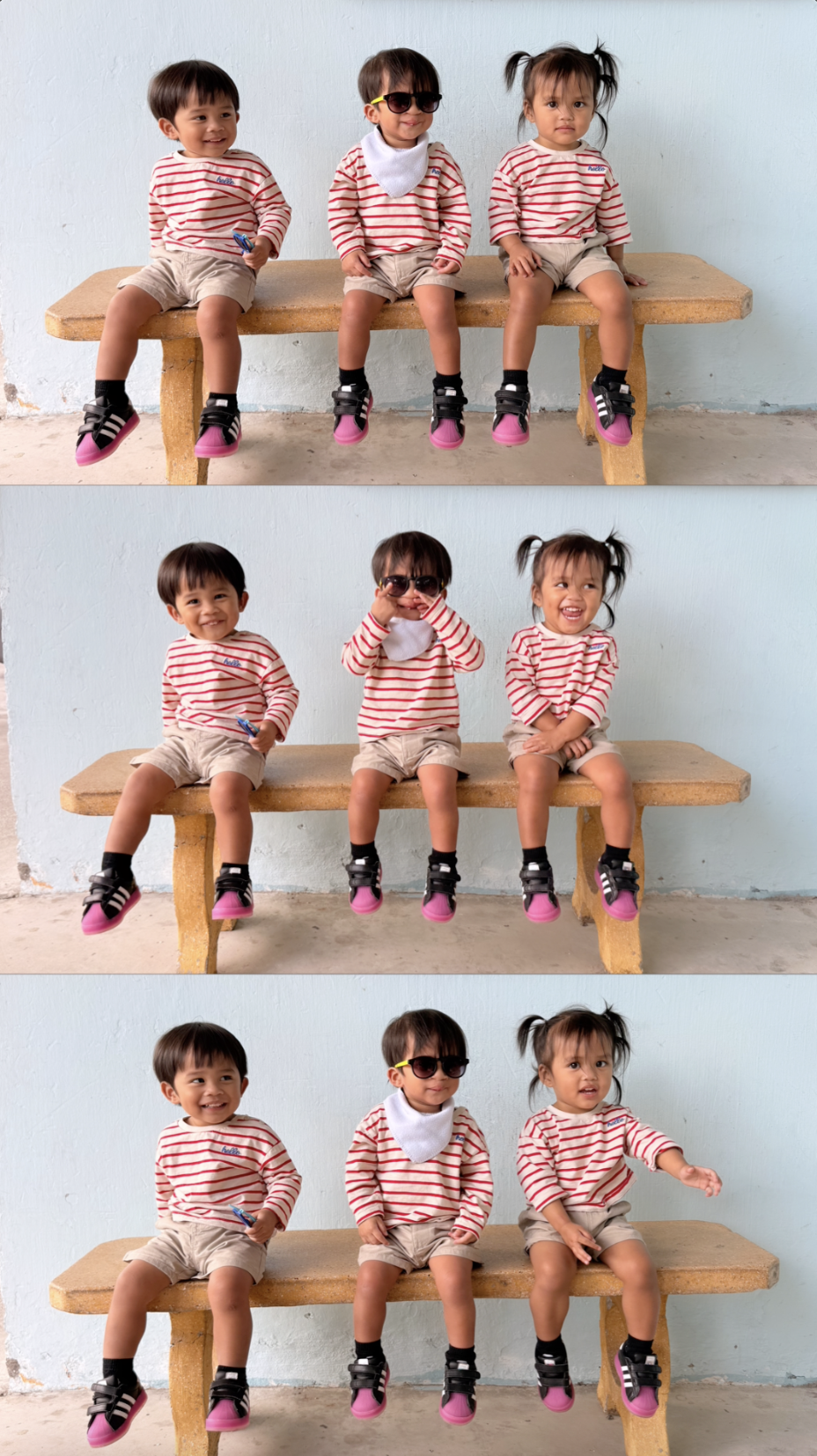
How was your triplet pregnancy like?
Although we did our fertility treatment at Thomson, Dr Janice (who previously worked at KKH) advised us to deliver at KKH as they are better equipped for multiple births.
We were advised to opt for Class C as triplets are often admitted to NICU due to premature birth. Throughout my pregnancy, I went to KKH as a subsidized patient for my scans. As for medications and supplements that I needed more urgently, I would contact the Thomson clinic via text and have them collected easily.
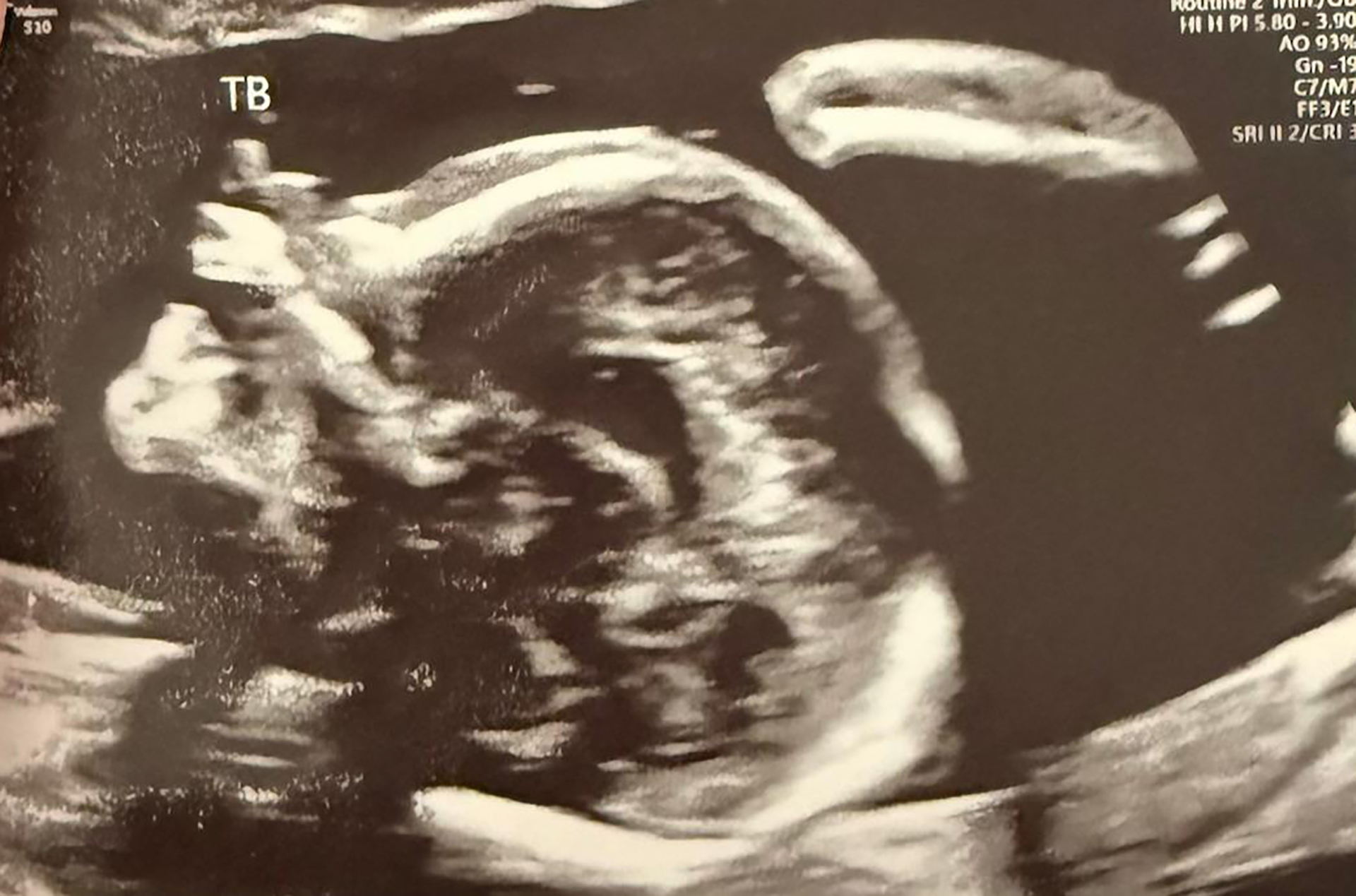
Physically, my pregnancy was relatively healthy. I remained active and walked often. At five months pregnant, strangers frequently asked if I was about to deliver—probably because I am only 147cm tall and my triplet pregnancy belly was very big.
At around seven months of pregnancy, I started losing my voice and became breathless easily. I couldn’t sleep lying down and mostly slept sitting up. Turning in bed required me to physically move my stomach first.
In the final month, I developed Pruritic Urticarial Papules and Plaques of Pregnancy (PUPPP) and Cholestasis of Pregnancy. It was extremely draining. I would wake up at 3am to shower for some relief from the itching, even if the relief was short-lived. Stretch marks appeared during this period as well.
I was referred to KKH Dermatology and was prescribed a cream with steroids. The doctors thought it was pregnancy eczema initially. It was only during the last 3 weeks of my pregnancy that my Cholestasis was officially diagnosed.
To cope with the symptoms, I applied the prescribed steroids. I also tried many other creams and gels but I still felt intense itch. It was really stressful. I wish I could put a stop to it but everyone told me it will only go away once I give birth.
The one product that worked for me was Magic Jelly from Lovera! That one was a life-saver and I still use it till today for any itch or cuts because it heals fast. I also learnt to scratch my body with a towel as an alternative to my invasive fingernails, haha.
How did you prepare emotionally and physically for the arrival of three babies?

I was overjoyed to finally be pregnant and cherished every single day, especially after waiting so long for this feeling. The experience felt even more special knowing there were three babies. Some days were physically challenging, with aches and pains everywhere, but I honestly loved every moment of being pregnant.
Physically, I didn’t prepare much because moving around had already become difficult.
My main concern was how I would be able to be present for all three babies, especially after learning about Triplet 2 (T2)’s cleft condition. I’ll share more about that later.
And now, it’s everyone’s favourite part. Please share your birth story with us!
I was admitted to the hospital two days before my scheduled C-section, which took place on 8 January 2024 at 12:30pm, at 34 weeks and 5 days of pregnancy, due to Cholestasis and the need for close monitoring.
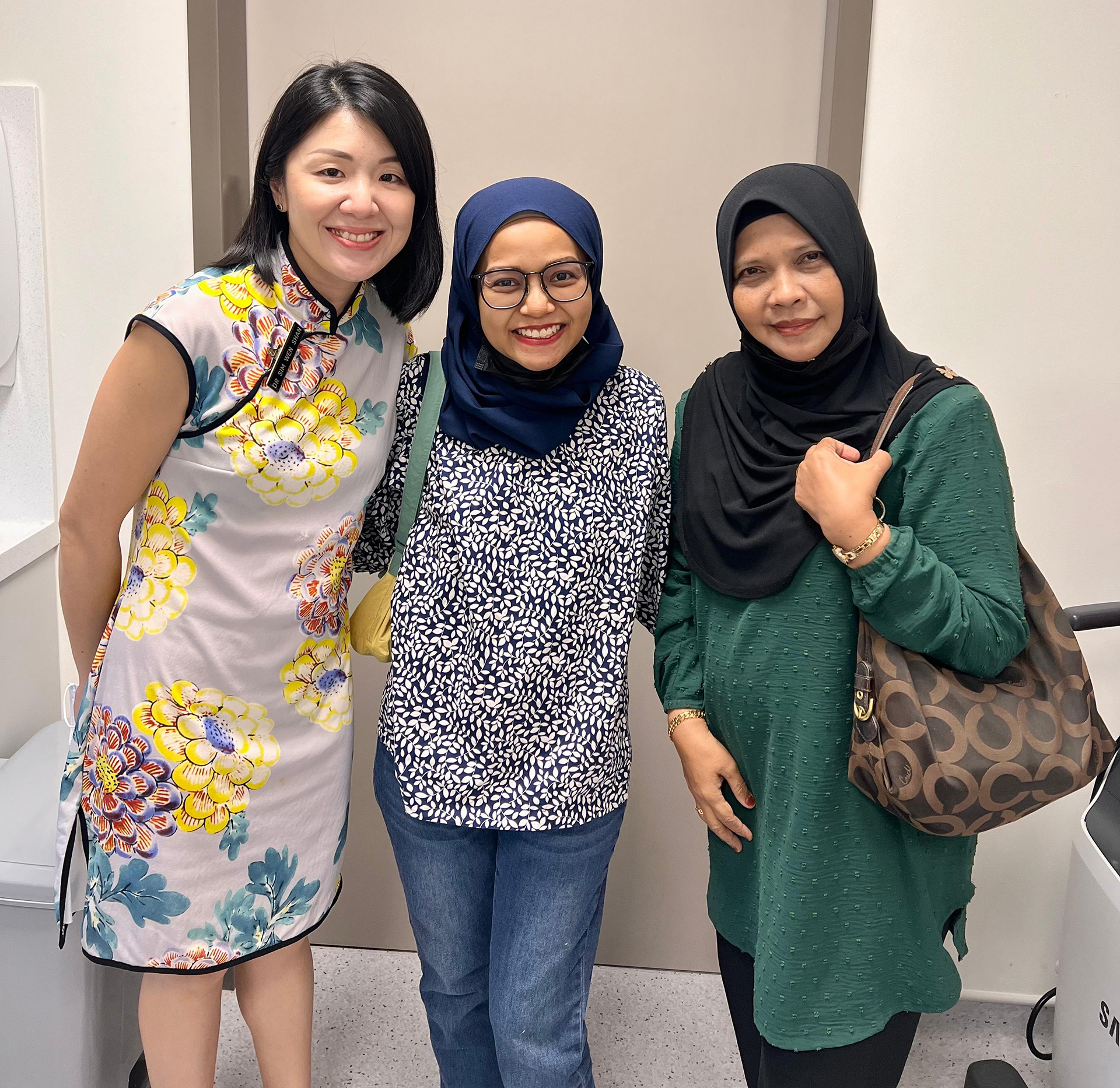
In the operating theatre, I kept watching the clock. Dr Sim Wen Shan, who is the clinical lead for the STORK Multiple Pregnancy Clinic at KKH, delivered my babies. It was a pleasant surprise for me as I was a subsidised Class C patient. I remember feeling incredibly thankful to have her there at such an critical moment.
I remember laughing and asking whether the surgery had already begun. Personally, I felt more nervousness about meeting my triplet newborn babies than about the surgery itself. Dr. Sim would count aloud after delivering each baby, announcing, "Baby one... OUT! Baby two... OUT! Baby three... OUT!"
I was worried, especially about my cleft baby, as we couldn’t confirm the full diagnosis until birth. Thankfully, the doctors assured me all three were alive and stable.
Skin-to-skin contact was not possible, likely because they were premature triplets.
After delivery, my consciousness came and went in waves. At that time, I thought it was normal. I felt myself being injected in multiple spots and recall giving verbal approval to the injections as I was told I needed all the medicines. Midway, I was moved to another operating table as well. Again, I assumed it was part of the usual process.
When the surgery was over, I requested for two blankets as I felt extremely cold and was literally trembling.
Subsequently, I was admitted to the intensive care unit (ICU). It was the next day when I found out that I had post-surgery complications. Admission to the ICU was necessary because my womb did not contract properly, resulting in significant blood loss on top of pre-existing anaemia. It was later revealed that the womb was close to being lost, but Dr Sim managed to save it by stitching it into a bag-like shape. I also received 2 packs of blood via transfusion.
During my initial recovery, I experienced breathlessness and water retention. It felt odd as I didn’t have much water retention during pregnancy. Little did I know, two weeks later, I would be in the resuscitation room at Changi General Hospital (CGH) Emergency Department (A&E) due to heart failure. It was then I was diagnosed with postpartum cardiomyopathy (heart failure), another unexpected chapter of our journey.
As for my triplets, we were blessed that they only required a stay in the Special Care Nursery (SCN) and not the Neonatal Intensive Care Unit (NICU). Their weights at birth were 2.1 kg, 1.9 kg, and 1.7 kg.
How did you manage caring for three newborns while also supporting one of them through his cleft lip condition?

Adzriel (T1) came home with me 5 days after delivery, Amanda (T3) came home 2 weeks after delivery, and André (T2) came home 1 month after delivery. André had to be closely monitored due to his cleft condition and was diagnosed with VSD (ventricular septal defect) after birth. As parents, we also had to go through an assessment before bringing him home, as we needed to learn Cardiopulmonary Resuscitation (CPR) and tube feeding.
The first year felt like survival mode. Appointments were constant—at least four per month in their first six months of newborn life. Thankfully, I had six months of maternity leave, and Nirza’s workplace was highly supportive.
The first year after giving birth felt like I wasn’t fully alive. I was on autopilot, and I couldn't really make sense of things as a first-time mum to triplets. Most days were spent living moment to moment, just trying to survive.
We enrolled the babies in infant care at four months old. Thankfully we applied for IFC 3 months prior to giving birth, and obtained slots for them at 4 months old. T1 (Adzriel) and T3 (Amanda) started first; T2 (André) joined them after his first surgery.
What role did your family or support system play during this time?
My parents would come over to our house to care for the babies and me, especially when my husband had to shuttle between hospitals and leave the two babies at home during the day. This support was crucial during the first month after birth and throughout the first year, particularly when André was admitted to the hospital several times for Respiratory Syncytial Virus (RSV) and for his first cleft surgery.
My mother-in-law and sister-in-law consistently supported us by helping with transportation and caring for the babies whenever we needed to be at the hospital with André (T2) for surgeries or admissions. Having help from them really eased things for us.
Most importantly, it was the support provided by my husband Nirza, who was extremely reliable.
Words cannot fully capture my awe and gratitude for how rock‑solid he was in his role as both a dad and a husband. He even cared for the two newborn babies at night on his own when baby André and I were still in the hospital. As a new dad at that time, I think he did an incredible job.
Which was more challenging for you—pregnancy, delivery, or postpartum?
Looking back, the postpartum period for me was more challenging than pregnancy or delivery.
During my triplet pregnancy, I was happy most of the time because I had finally become pregnant—it was the best feeling ever. Despite the challenges I faced (especially carrying triplets with my small frame), I stayed positive and focused on the joy of being pregnant with my three babies. While it was physically and emotionally demanding, overall I felt mentally happy and grateful for the pregnancy.
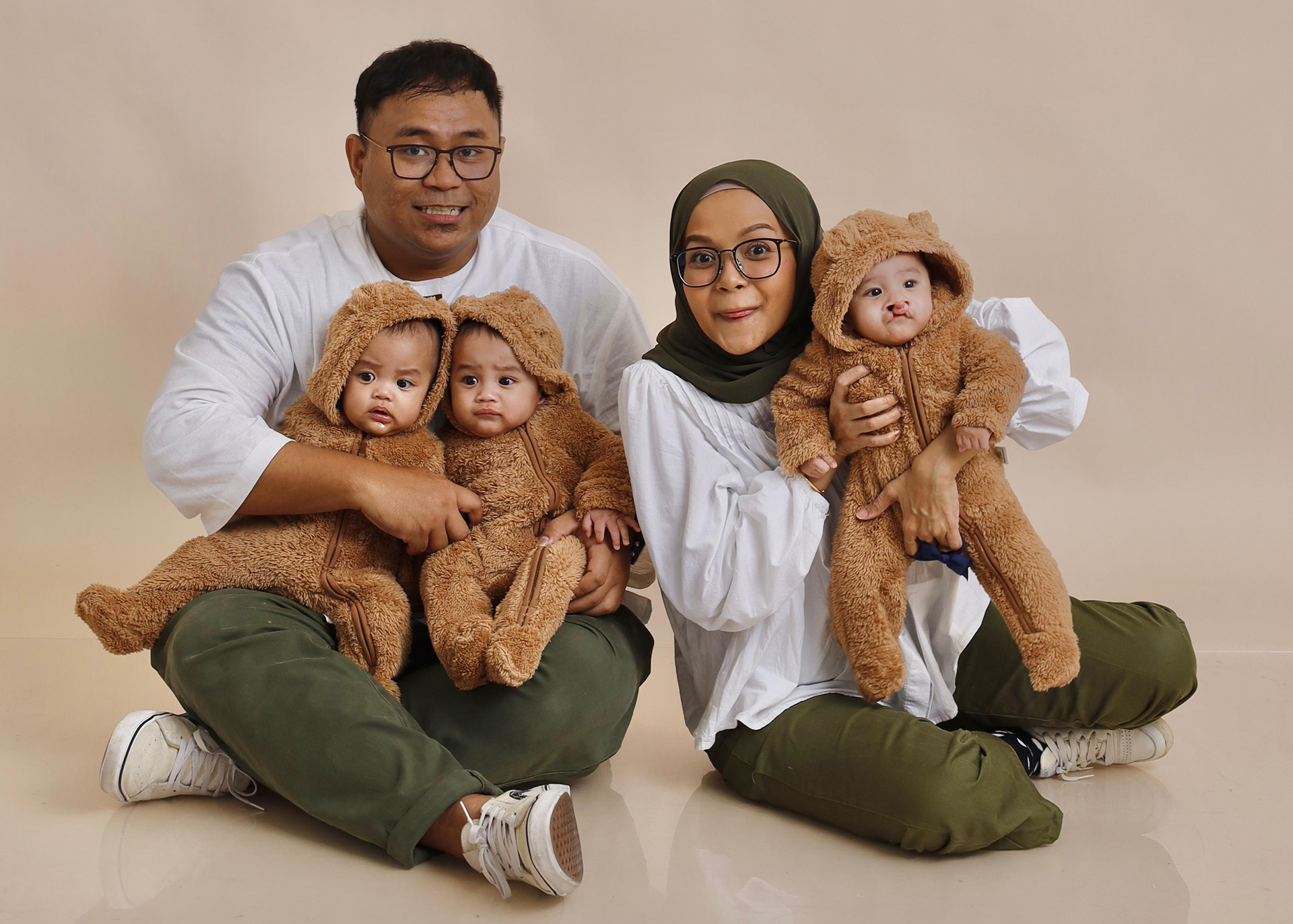
The postpartum period was especially challenging with so many medical appointments for both the babies and myself. While we did not have a domestic helper, our extended family on both sides were readily supportive and understanding.
In terms of caregiving, I did do a fair bit of reading and research prior to my delivery that made things easier. I think that also made me mentally more prepared.
Looking back, what advice would you give to other parents expecting multiples or facing similar medical challenges?
Take advice from others, but don’t let it overwhelm you. Keep what makes sense for your situation and ignore the rest. Everyone has a different journey so try to not get too affected by what others say, especially if the advice isn’t helpful for you.
As a triplet mum, emotional regulation is crucial. Things can get intense, and you need to stay grounded.
Read more and arm yourself with relevant knowledge so that you can be mentally prepared for what’s to come.
Most importantly, you come first. Choose your battles in a way that protects your sanity. As long as your children are safe, you are doing enough.
We plan, but God decides what is best. I never expected to be blessed with three children at once after six years of waiting. Even through the challenges, everything turned out manageable in time. God knows best.
–––
Resources and recommendations from Nina:
Support groups:
Fertility Support SG, for IVF/IUI related support on Facebook
TAMS- Twins And Multiples Singapore, for parents of multiples on Facebook
Singapore Cleft Parents Support Group, for cleft related support on Facebook
Triplet Parents Support Group, a private WhatsApp chat group
Doctors:
Dr Janice Tung – Consultant in Obstetrics & Gynaecology and Accredited IVF Specialist at Thomson Fertility Centre and The O&G Specialist Clinic. I loved her honest, direct communication and supportive approach throughout my fertility treatment and pregnancy.
Dr Sim Wen Shan – Senior Consultant in Maternal Fetal Medicine at KK Women’s and Children’s Hospital and Head of the Antenatal Risk Assessment Unit. She specialises in multiple pregnancies, prenatal diagnosis, pre-eclampsia screening, and high‑risk obstetric care. She is also the clinical lead for the STORK Multiple Pregnancy Clinic at KKH.
—
A big thank you Nina for so generously sharing your experience with us. We hope her journey brings comfort, perspective, and strength to families walking a similar path.
Stay tuned for Part Two, where Nina opens up about André’s cleft lip journey as a baby and her unexpected experience with postpartum heart failure.
Whether you're raising multiples or multiple children, finding a supportive parenting community makes all the difference. Join the conversation and share your experience with us! Follow us on Instagram for more updates.