Preparing to welcome a baby—or two, or three—is a life-altering transition for any parent. But when you're expecting multiples, the demands can feel so much heavier. That's why having steady, informed support is essential. People often think of a doula as simply a birth companion for the mother, but our role goes far beyond that.
I'm Chantel Kismet, founder of Blooming Births, a Singapore-based, evidence-informed, and trauma-aware practice. As a doula, educator, and parent coach, I help mothers feel informed, grounded, and emotionally steady—and support couples in breaking generational cycles. Here's how doulas can support parents as a team.
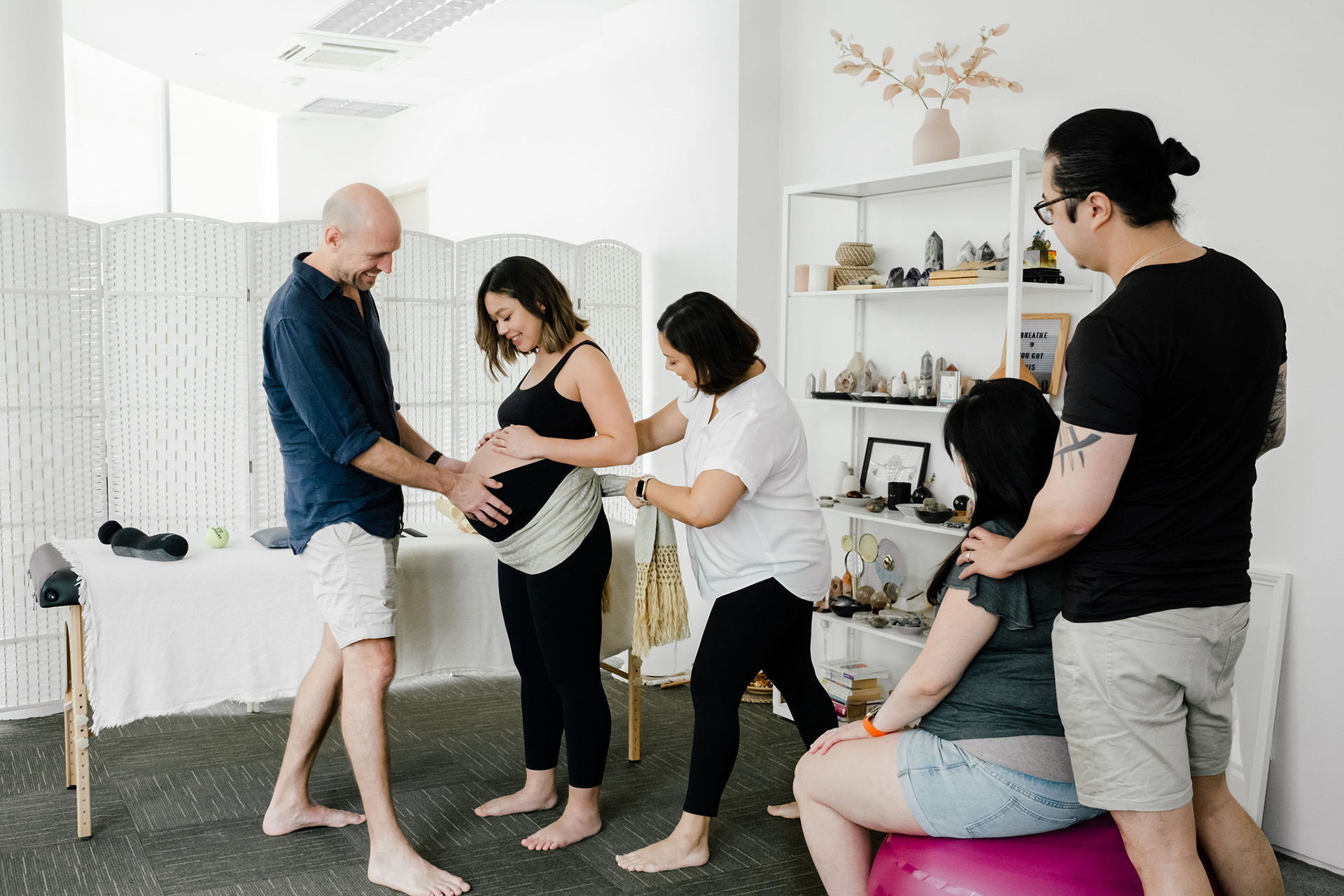
Hi Chantel! Can you share a little about your journey into birth work and what inspired you to found Blooming Births?
I didn’t fall into birth work. I was pulled into it. My own birth experience was traumatic. I went into labour not fully understanding my options, feeling uncertain and unprepared. I was pushed into having a cesarean and in the final hours, I fired our doctor. It was scary and we felt lost! But thankfully we found a doctor who was doing her rounds and went on to have a vaginal birth!
That experience cracked something open in me.
Postpartum was still hard. I struggled with depression. My marriage felt the strain. Parenting brought up old wounds and generational patterns I didn’t even know were sitting inside me.
And that’s when I realized, birth is not just about how the baby comes out. It’s about transformation - self-trust and power. It’s about meeting a new woman within yourself — one you didn’t know existed until you were stretched to your edges.
Blooming Births was born from that fire.
Mothers deserve to feel supported and informed. They deserve to build self-trust. And couples deserve support in recognising the patterns and triggers that surface in pregnancy and early parenthood because when we become aware of them, we begin to break generational trauma rather than pass it on.
From your experience, how does pregnancy with twins or triplets differ emotionally and physically from singleton pregnancies?
I believe that all pregnancies, whether singleton or multiples, bring big emotional shifts. Pregnancy is an identity transition. It stirs hormones, fears, hopes, relationship dynamics. That part is universal.
Where multiple pregnancies differ more significantly is physically… the body is working extra hard. There’s more monitoring, often more medical involvement. Fatigue can feel deeper. Discomfort may come earlier. And naturally, there’s a different set of clinical considerations.
Emotionally, the difference I often see isn’t necessarily “more emotion,” but a different quality of worry.
With twins or triplets, the word “high-risk” tends to enter the conversation very early. And once that label is introduced, many parents feel like the pregnancy becomes a medical case rather than a personal journey. That subtle shift can affect confidence and autonomy.
Common concerns I hear include:
· “Will I automatically need a C-section?”
· “Is vaginal birth even an option?”
· “Will they definitely be premature?”
· “Can my body handle this?”
Another practical reality is that with multiples, parents are often preparing for two or three babies at once. It’s double the logistics, double the feeding, double the sleep considerations. The preparation feels heavier and sometimes it can feel like there isn’t enough space to focus on one baby at a time or one emotion at a time.
One misconception I gently challenge is that twins automatically mean chaos or trauma. It doesn’t have to. But preparation does need to be more intentional - physically, emotionally and practically.
Support needs to scale accordingly.
What are some unique considerations families expecting twins or triplets should think about when preparing for birth?
When preparing for a twin or triplet birth, families aren’t just preparing for “more babies.” They’re preparing for a different medical landscape and a different emotional terrain.Here are a few deeper considerations I encourage families to reflect on:
Understanding emergency pathways in advance
With multiples, the likelihood of rapid decision-making increases.
Ask:
- What would trigger an urgent cesarean?
- How quickly can theatre be activated?
- Who makes the call and how is that communicated?
When parents understand the emergency plan before labour, it reduces panic if the room suddenly shifts pace.
Clarify breech protocols - especially for Twin B
It is common for Twin A to be head-down and Twin B to shift after the first birth.
Important questions:
- Is your provider skilled in breech extraction?
- Would they attempt an internal version?
- Would they automatically move to cesarean?
Provider skill and confidence matter greatly here.
Prepare for two possible birth modes
With twins, it is possible to have:
- Vaginal birth for both
- Vaginal for Twin A and cesarean for Twin B
- Planned cesarean
Emotionally rehearse all three scenarios. Not because you expect complications, but because resilience increases when shock decreases.
Skin-to-skin planning
With multiples, immediate skin-to-skin requires intentional coordination.
Discuss:
- Can each baby go to a parent immediately?
- If one baby needs NICU assessment, can the other remain skin-to-skin?
- If it is a cesarean, can the partner provide skin-to-skin while the mother is being closed, assuming babies are stable?
Breastfeeding strategy
Multiples often mean an earlier delivery, smaller babies and possible NICU time.
Discuss:
- Early hand expression
- Pump access within the first hour
- Lactation support in hospital
- Tandem feeding positioning
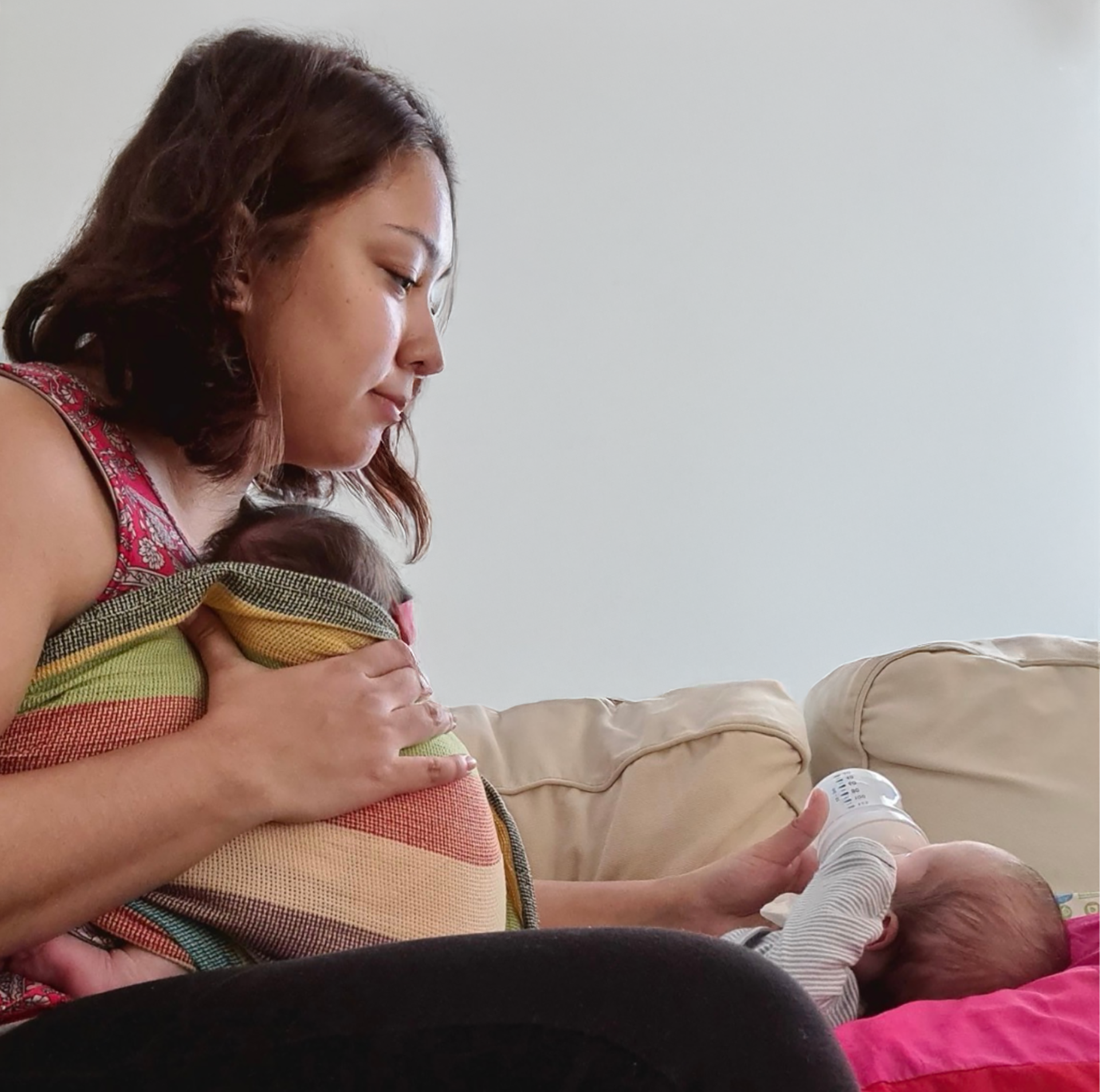
In essence, preparing for multiples means preparing for flexibility, coordination and more support. When families understand both physiology and protocols, they move through birth steady, even when things evolve.
Can you share an anecdote about supporting a mother carrying multiples?
One story that stands out to me was a mother I supported during COVID who was expecting twins. She came to me deeply afraid. She had experienced three prior miscarriages, so the pregnancy already carried emotional weight. On top of that, she had been repeatedly reminded how “high-risk” twin pregnancies were. The fear was not irrational, it was layered, lived and very real.
To make things harder, she wasn’t Singaporean and due to lockdown restrictions, her family couldn’t travel in. There was no extended support. It was just her and her husband, navigating a twin pregnancy in isolation. She had planned for a vaginal birth. Labour was intense - physically, yes, but more so emotionally. There was a lot of fear in the room. And eventually, the birth shifted to a cesarean. What struck me most was not the change in plan but how she handled it.
She made the decision with clarity. She reframed it not as a failure, but as giving her babies the gift of safety. There was strength in that. Empowerment doesn’t always look like sticking to Plan A, sometimes it looks like choosing calmly when circumstances evolve.
Postpartum was tough. Two newborns. No family support. Pandemic restrictions. But in those first two weeks, we worked closely together—me as her doula, her husband and her. We built rhythms, problem-solved feeding issues and protected her rest.
What stood out to me was this: support doesn’t remove difficulty, it transforms how difficulty is experienced and that’s a win to me.
How can having a doula make a meaningful difference for parents expecting twins or triplets?
With multiples, the birth environment often becomes more medical by default. There are more protocols, more monitoring and sometimes more people in the room. That can feel overwhelming—especially in vulnerable moments.
This is where a doula can make a meaningful difference. She provides continuity in a space where medical teams rotate. Nurses change shifts. Doctors come and go. A doula stays. That steady presence matters more than people realise.
We support emotional regulation because when the room suddenly fills with staff, or plans shift quickly, the nervous system can spike. A calm, grounded presence helps parents stay centred rather than swept up in urgency.
We translate in real time. Not to undermine medical professionals, but to ensure parents understand what’s happening and why. Clarity restores agency.
We guide partners moment by moment:
“Here’s how to position her”
“Here’s what she needs right now”
“Stay close. Breathe with her”
And importantly, we advocate without confrontation. We respect medicine. We understand hospital systems. We help families navigate them calmly and collaboratively.
For twin or triplet births where the room can suddenly feel like controlled chaos, that calm anchor becomes invaluable.
Many multiple pregnancies are labeled “high risk.” As a doula, how do you help mothers stay grounded?
One of the most important distinctions I help families make is the difference between risk and fear. When a pregnancy, especially a multiple pregnancy, is labelled “high-risk,” many parents internalise that as “something is wrong with me.” The nervous system shifts into threat mode. And when that happens, it affects everything: sleep, blood pressure, decision-making, bonding, even how labour unfolds.
I help mothers:
- Understand their actual medical data
- Ask informed questions
- Develop regulation tools (breathwork, somatic awareness)
- Reclaim language (“monitored pregnancy” vs “dangerous pregnancy”)
When parents stay resourced, they make better decisions. They think more clearly. They advocate more calmly. Empowerment is not about ignoring statistics—it’s about not allowing statistics to dictate your identity or collapse your confidence.
What advice would you give to partners?
Your role is not to “fix”, your role is to:
- Stay steady
- Learn the stages
- Practise physical support
- Know her triggers
- Prepare for postpartum just as much as birth
- Validate her and learn her love language
- Learn birth advocacy to stand up for her
- Support, support, support!

And just as importantly, take care of yourself. A depleted partner cannot provide steady support. Rest. Reach out to trusted friends or a therapist if needed. Fill your own cup in healthy ways so you can show up grounded when she needs you most.
Quick-fire questions, answered in less than 5 words:
One word that describes birth?
Becoming.
Most underestimated aspect of postpartum?
Rest and rediscovery of self.
Hospital bag essential?
Snacks. Always snacks.
A myth about doulas?
We override doctors. (We don’t.)
Advice for a mother overwhelmed at 3am?
Cry. Swear. Then breathe.
__
Whether you're raising multiples or multiple children, finding a supportive parenting community makes all the difference. Join the conversation and share your experience with us! Follow us on Instagram for more updates :)